We’re sailing on Loch Ness toward Fort Augustus. The sunshine is beautiful. I just cut my hair on the foredeck, and I still have a little time to write a blog post before we get ready to dock. Yesterday we set out early from Inverness.
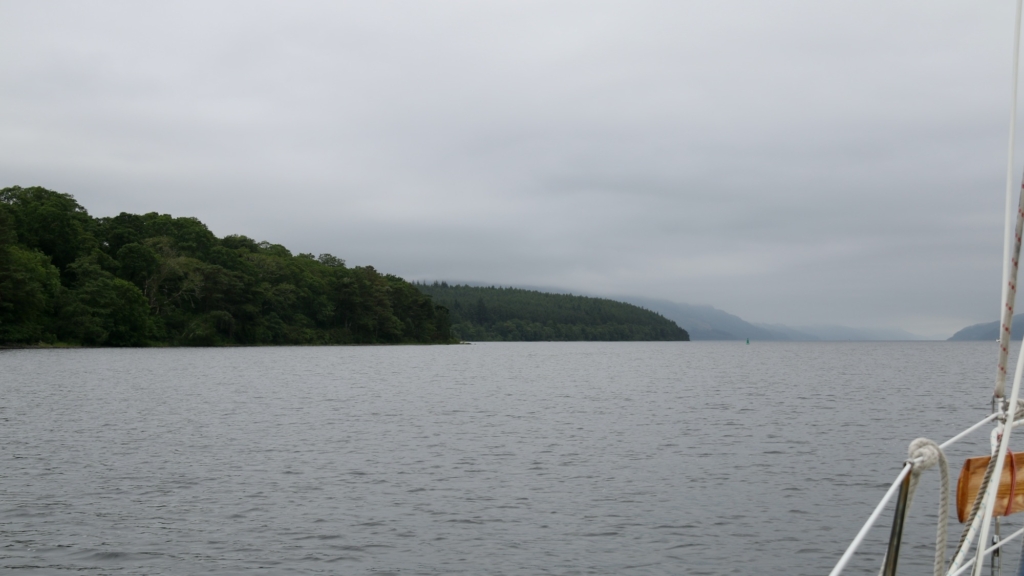
We’re sailing on Loch Ness toward Fort Augustus. The sunshine is beautiful. I just cut my hair on the foredeck, and I still have a little time to write a blog post before we get ready to dock. Yesterday we set out early from Inverness.
The wind just wouldn’t shift, and after a storm in Peterhead—during which one pontoon (of he one where Amy was moored of course) had started to break off and could only be saved with chains, winches, and a combined effort (in the end, even the welders from the big harbor showed up), it was clear to me that if I had to sail, motor, or do whatever to propel ourselves against the wind, I wanted to wait for a period of light winds. It finally arrived on Tuesday evening. Until then, it had basically been raining nonstop. I went into town a few more times, made some errands, and set sail around 8 p.m.—in the rain and, as it turned out, thick fog. Not very pleasant, but what can you do. Overnight, the weather cleared up a bit and it stopped raining.
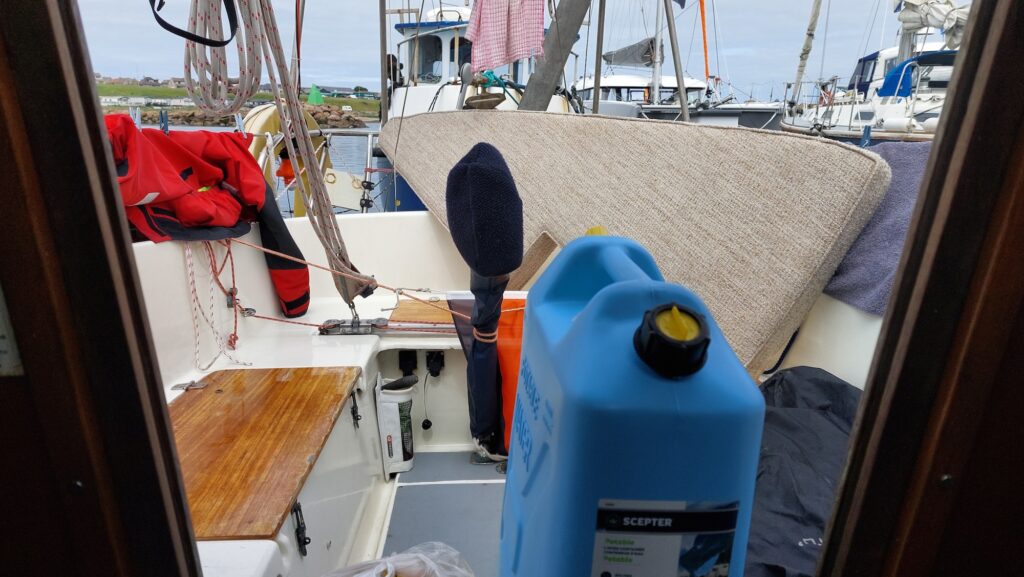
Since then, I’ve met some nice new people here, removed the window, resealed it, and reinstalled it; dismantled the pulpit and patched up all the holes; and completely caulked the vent so that, while it no longer provides ventilation, at least it doesn’t leave a hole in the deck. Sealing the hatch turned out to be easy. The seal had only slipped out of place, and once I put it back, it was watertight again. Now I’m just waiting for the right weather to continue my journey, so I can hopefully meet Zissi in Inverness soon.
After a few hours of motoring at the start, I hoisted the sails, and Amy managed to make 4 knots even with very little wind. The wind died down even more, so we were moving very slowly. But I didn’t mind, because the area with the shitty weather toward the end of the trip was supposed to be closer to the Scottish coast rather than further east. So I figured: if I arrive later, I might actually be better off. Of course, that turned out not to be true, but at the time it sounded reasonable to me. On the second day, there was so little wind that you could see right through the water—and thus also the dolphins swimming under the boat and playing with Amy. We were still making 1.5–2 knots, after all.

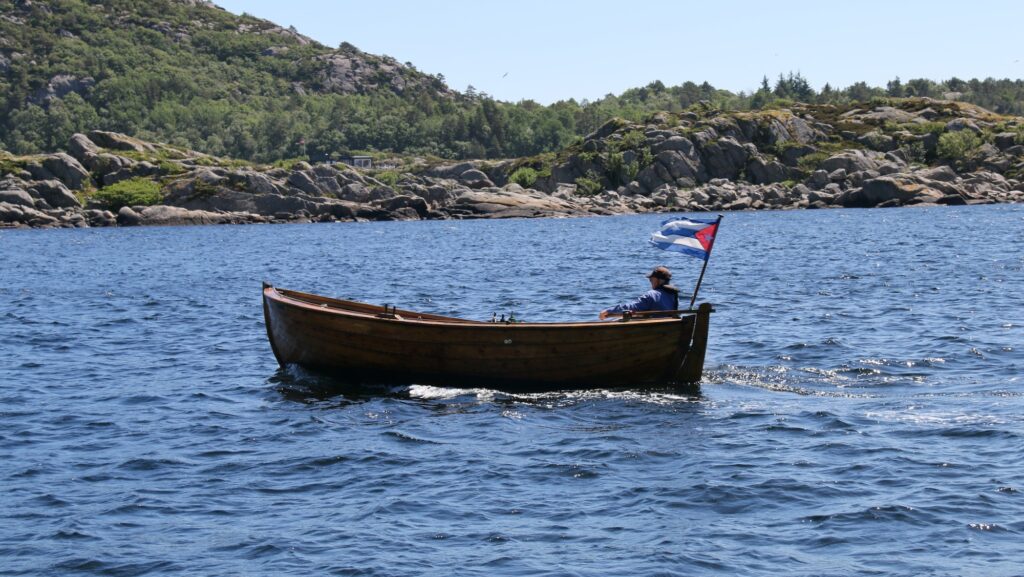
The next morning, I continued on to Mandal. Again, I mostly stayed close to shore under motor power. The scenery along the way was just as beautiful as the day before. Shortly before reaching Mandal, I came across a classic wooden motorboat with a Cuban flag flying at the stern. I would, however, doubt that the man had actually motored all the way from Cuba to here in this vessel.
Surprisingly, there wasn’t a single spot available in Mandal, since the offshore regatta “Race to the Arctic” was set to start the next day and all guest berths were reserved for the racers. Luckily, I did find a spot after all, right alongside the road. It was very bumpy and noisy, but I didn’t care. It was only for one night. Tomorrow I’d be heading off to Scotland anyway.
Outside, the wind was blowing at force 5–6 from the west, but inside, along the skerries and through the small natural channels, we were well sheltered. Sailing is practically impossible here anyway, and out there I wouldn’t have gotten any closer to my destination. So we motored along the beautiful Blindleia Strait for the first part of the journey. A real sightseeing cruise. We passed small settlements, vacation homes, harbors, rock formations…
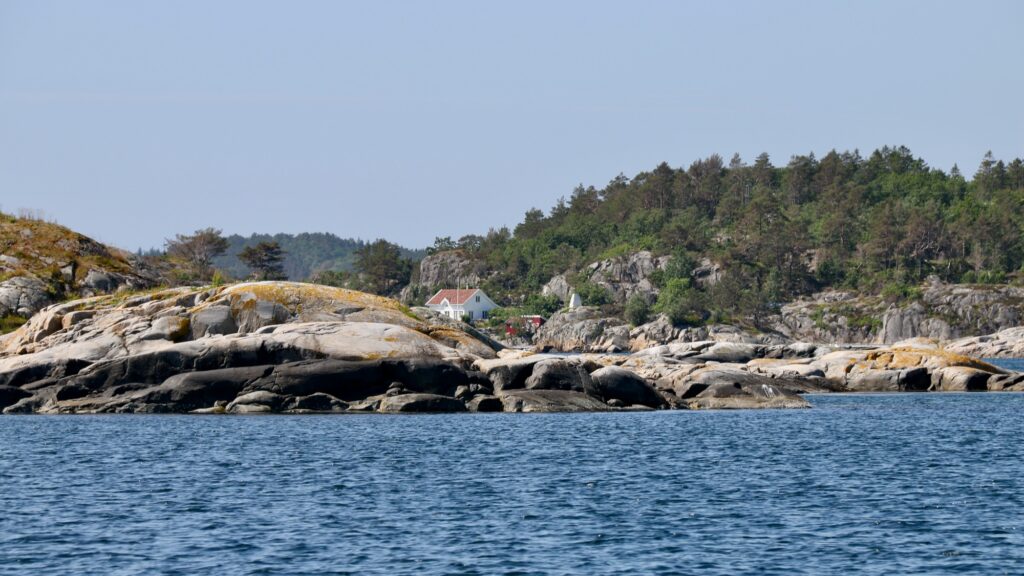
This island belongs to the municipality, and anyone can dock there, camp, or just spend the afternoon. There is a small café run by volunteers, who in return get to live in the house on the island for free during that time.

We set sail from Rønnerhavnen at 3 a.m. It was already almost light out—or rather, it had never really gotten dark. The 100 nautical miles that Amy can normally cover in 24 hours would certainly take longer, since the winds were expected to be light. But the wind was coming from a fairly good direction.
After we had passed the large roadstead off Skagen, the first surprise awaited us just past the headland. The strong winds of the previous days had left behind quite a swell, coming from all directions. With light winds, Amy was tossed back and forth by the cross seas, and life on board quickly became miserable. It wasn’t until late afternoon that things finally calmed down, and by evening the sea had become smooth, allowing us a relaxed sail against a light headwind but still heading toward our destination.

I am in Rønnerhavnen, have just finished eating, and am drinking a relatively expensive (but for Scandinavian countries still pretty cheap) Danish beer from a can. The sun still hasn’t set (it’s past 10 p.m.). The 2026 Swedish Midsummer Festival will have to take place without Amy and me again this year.